
If you’re blind or have low vision, the Social Security Administration (SSA) has special rules that allow you to receive benefits when you are unable to work.
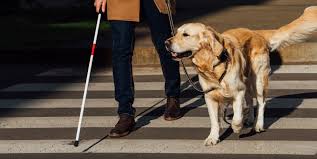
First, so we are on the same page, let’s look at the SSA’s definition of blindness:
Blind: if your vision can’t be corrected to better than 20/200 in your better eye. You may also be considered blind if your visual field is 20 degrees or less in your better eye for a period that lasted or is expected to last at least 12 months.
The SSA pays benefits to individuals who are blind through two programs: the Social Security Disability (SSD) program and the Supplemental Security Income (SSI) program. Although the medical rules used to decide whether you are blind are the same for both programs, other rules are different.
- You can receive disability benefits if you’re blind. You may be eligible for SSD if you meet the SSA’s definition of blindness.
- You can get disability benefits even if you’re not blind. If your vision doesn’t meet the SSA’s definition of blindness, you may still be eligible for disability benefits. This is true if you are unable to work due to your vision problems alone, or when combined with other health issues.
How you become eligible for Social Security Disability (SSD) benefits
When you work and pay Social Security taxes, you earn credits that count toward future SSD benefits. If you’re blind, you can earn credits anytime during the years that you work. Credits for your work after you become blind can be used to help you become eligible for benefits if you don’t have enough credits at the time you become blind.
If you don’t have enough credits to get SSD benefits based on your earnings, you may be able to get benefits based on the earnings of a parent or your spouse.
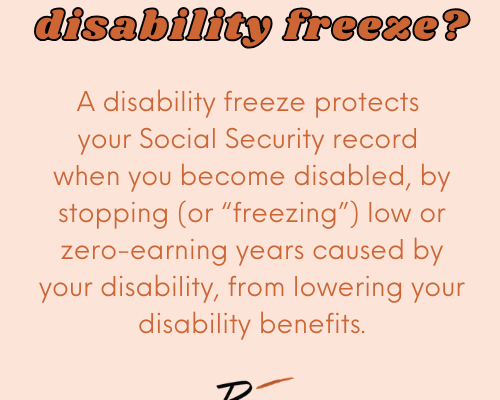
There is also a special rule that may help you eventually get higher retirement or disability benefits and it is called a “disability freeze.” You can use this rule if you are blind but aren’t getting disability benefits now because you are still working. If your earnings are lower due to your blindness, those work years can be excluded when your benefits are calculated. Since Social Security benefits are based on your average lifetime earnings, your benefit will be higher if those years are not included.
If you are blind, you can still work and receive benefits.
Work incentives make it easier for people receiving disability benefits to work. People receiving benefits can continue to work, as long as their earnings are not more than the amount set by law. If you are blind and receiving disability benefits, you can earn as much as $2,830 per month in 2026, without jeopardizing your benefits.
Being blind and working at age 55
Determination rules about work are different for blind individuals vs those who are not blind. In 2026, beginning at age 55, if your earnings are above $2,830 a month, benefits are suspended, but not terminated. This applies if the work you’re doing requires a lower level of skill and ability than what you did before you reached 55. You may receive disability benefits for any month your earnings fall below this limit.
As you can see, disability benefits can be confusing, and the process may take some time. Your best option is to contact the legal team of Parmele Disability Advocates. They have over 150 years of combined disability experience and have helped over 65,000 receive their disability benefits. Call today, 866-547-4290, to schedule your no-cost consultation where we will review your situation, answer your questions and determine your next best steps.
Parmele Disability Advocates. Helping you get the disability benefits you deserve.