
When applying for Social Security Disability (SSD) benefits, the majority of applicants focus their efforts on obtaining medical records, doctor statements, and work history. And while those are critical, there’s another section of the application that is extremely important and carries significant legal weight. That step is called attestation.
What Is Attestation?
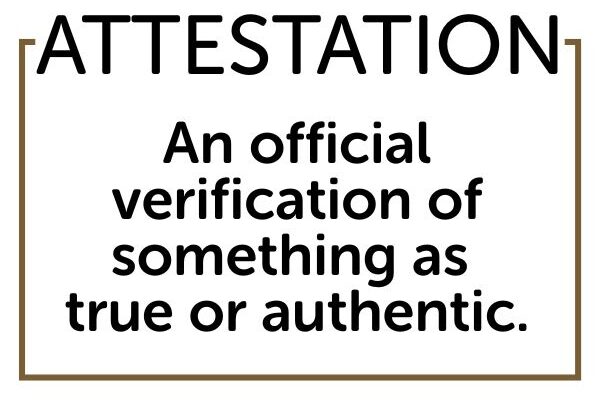
The attestation is the section at the end of your disability application where you:
- Confirm the accuracy and truthfulness of all the information you provided
- Acknowledge that dishonest statements may result in penalties
- Authorize the Social Security Administration (SS) to collect your medical, financial, and employment records
- Agree to report changes in your health condition, work status, or income
In general terms, the attestation takes your application from a set of answers into a legal declaration.
Why attestation matters.
Many applicants rush through this part because it feels routine. However, it is not. When you sign the attestation—whether electronically or on paper—you are certifying under penalty of perjury that all information included in the application is true, honest, accurately described, complete, and correctly reported.
- Your medical conditions are accurately described
- Your work limitations are truthful
- Your employment history is complete
- Your income and resources are correctly reported
Legal Implications of the Attestation
By signing the attestation, you are acknowledging your awareness that providing dishonest or false information can result in your disability benefits being denied. If you have already received benefits, you may be required to repay them, incur civil penalties, and even face criminal prosecution for cases of intentional fraud.
- Providing false information can result in the denial of benefits
- Benefits already paid can be recovered (overpayment)
- Civil penalties may apply
- Criminal prosecution is possible in cases of intentional fraud
Authorizations
 Attestation includes permission for the SSA to do several things including obtaining your medical records, verifying your earnings with employers, reviewing your tax records and contacting applicable third parties to confirm your information. Since disability claims are evidence-driven, the attestation is essential because it allows the SSA to verify your claims with evidence.
Common Mistakes Applicants Make
We all recognize that mistakes happen. However, it is extremely important to make sure that the attestation is as error-free as possible. Here are a few mistakes related to the attestation portion of your claim:
Not Reviewing the Entire Application Before Signing.
While the electronic system is good at saving everything correctly, mistakes or mis-entering information may occur. Make sure to review your entire application before attesting.
Forgetting to Report Side Work or Gig Income.
If you worked and it generated income, you must report it.
Exaggeration.
Overstating can harm credibility. Accuracy is paramount.
Failing to Report Changes After Filing.
After signing the attestation, you must still report any new work activity, changes in condition (especially improvements), changes in address, or income.
While the attestation portion of your claim may seem like a formality, it is one of the most important parts of your application. It authorizes the investigation into your claim that you are disabled, it establishes your credibility, and it legally binds your statements.
Accuracy at the attestation portion of your claim is extremely important. Why risk your claim being denied? Contact Parmele Disability Advocates to schedule your no-cost consultation: 866-815-5244. Together, we will review your situation, answer your questions, and help determine your next best steps.
Parmele Disability Advocates. Helping you get the benefits you deserve.